Three months old. 100,000 downloads per month. $100,000 in monthly revenue. True Heritage & Ancestry: EDNA is one of the most aggressive ramps in the app store right now, and the playbook behind it is worth studying in detail.
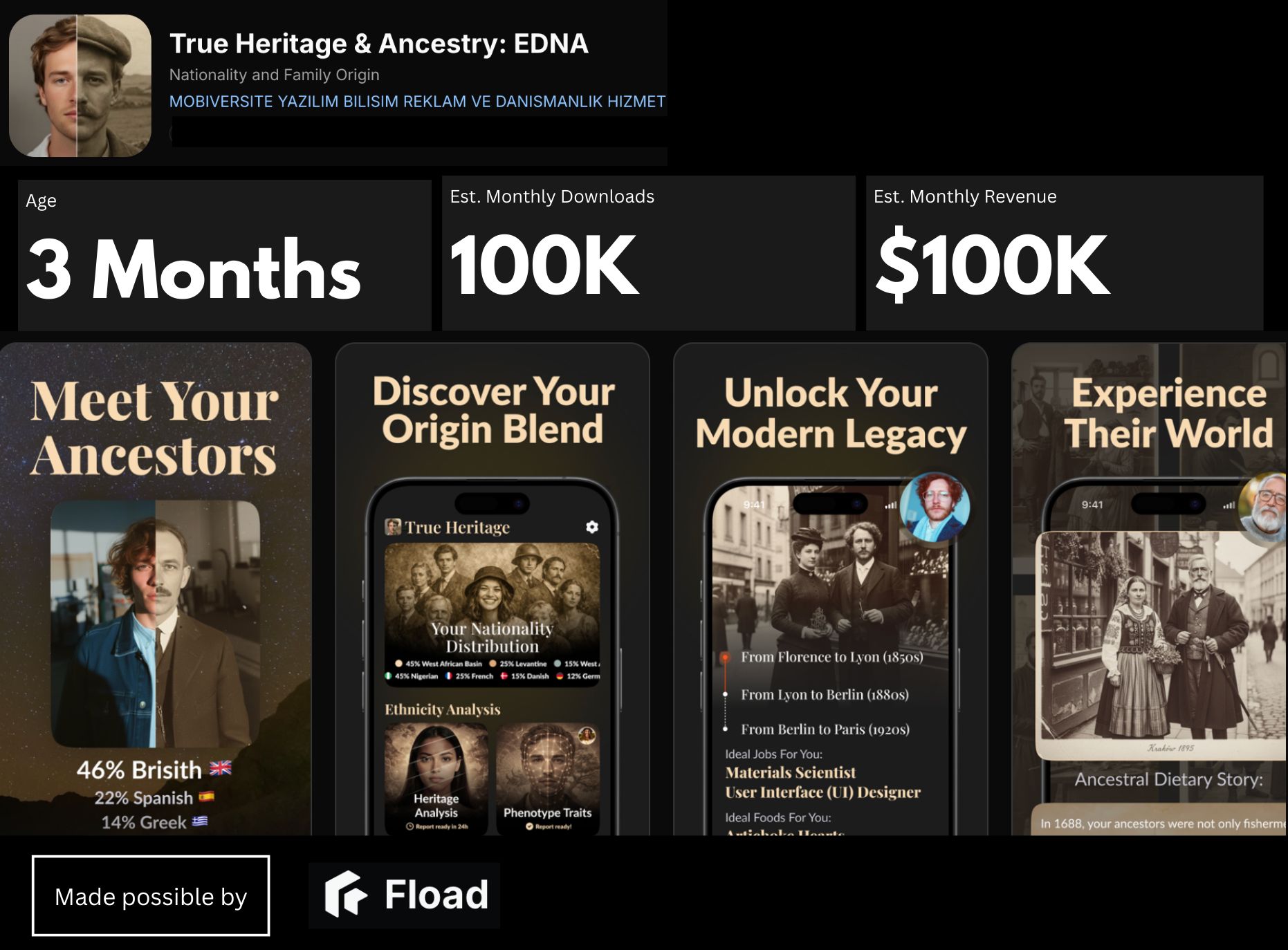
This is not a standard app breakdown. The design is too intentional for that.
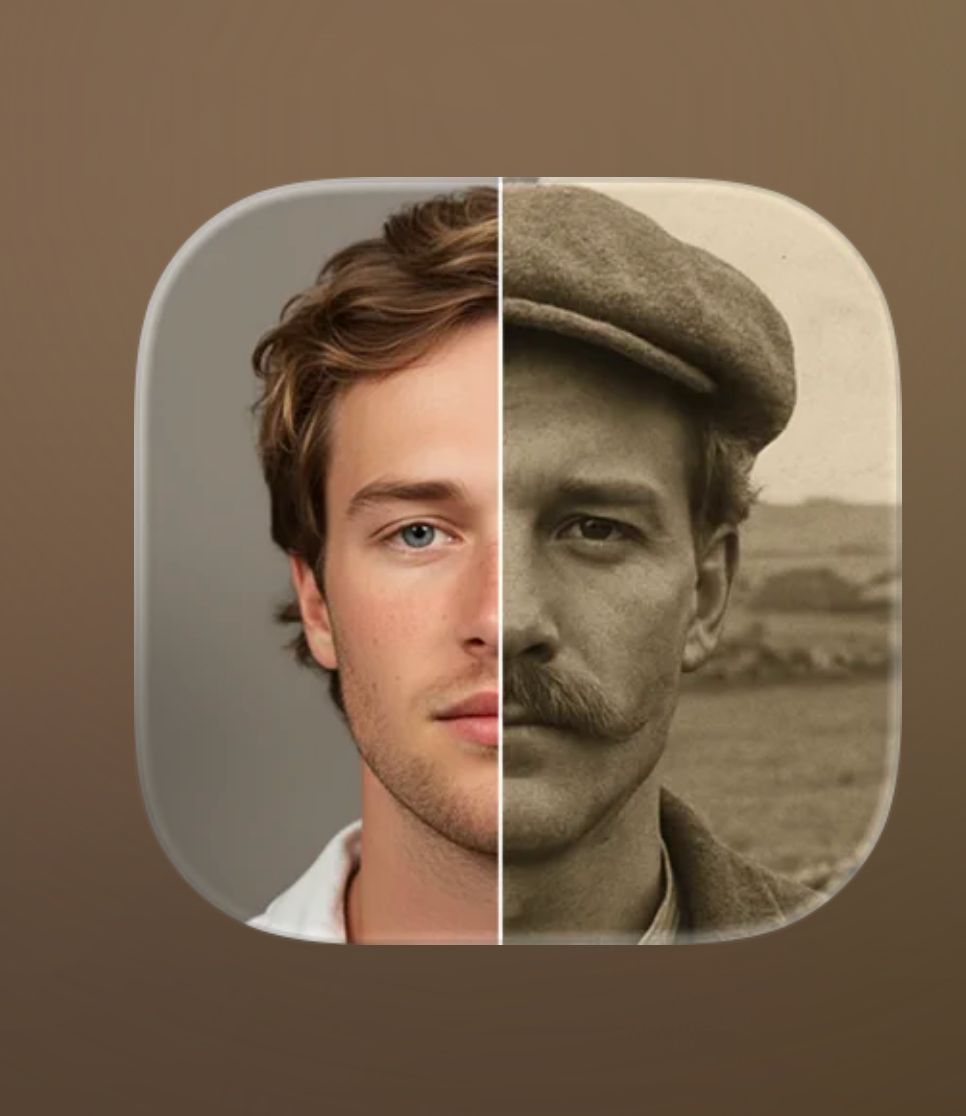
Start with the app icon. It is a split image: half a modern face, half a sepia-toned ancestor portrait. You instantly know what the app does before you read a single word. That is rare. Most app icons are decorative. This one is a conversion asset.
The App Store screenshots are equally strong. Every screen is designed to make you feel something before you install. The visual language is consistent, dark, and cinematic. The conversion rate for this listing is almost certainly above average.
The onboarding opens with a single ask: upload a photo. If you do not want to, three sample photos are provided. You can test the entire core experience with zero personal commitment.
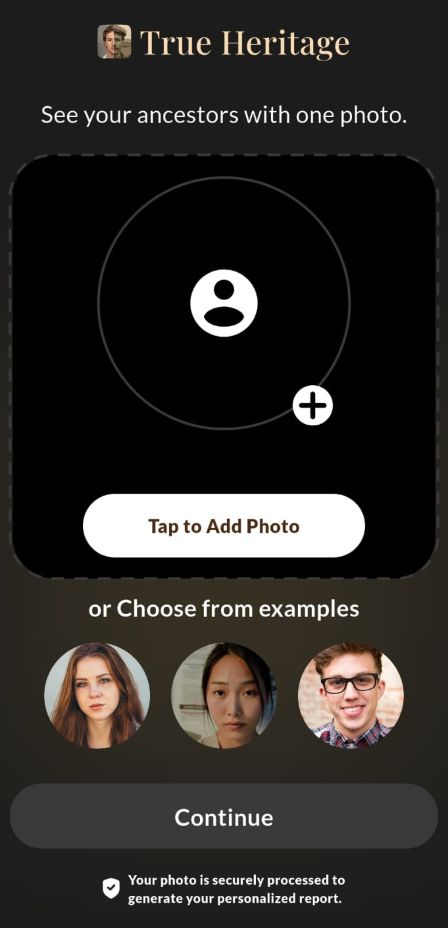
This is a pattern borrowed from AI interior design apps. Letting users test with sample inputs removes the biggest friction point in photo-based apps: the moment where someone thinks “do I really want to give this app my face?” By offering sample photos, they get you into the experience first. You get invested before you have to decide anything.
Once you submit a photo, the app starts analyzing.
The loading screen calls it “Unlocking Your Story” and ticks through steps like “Cross-Referencing Geographic Datasets” and “Identifying Unique Ancestral Patterns.” These progress steps are not functional. They are narrative. They make the wait feel meaningful and the result feel earned.
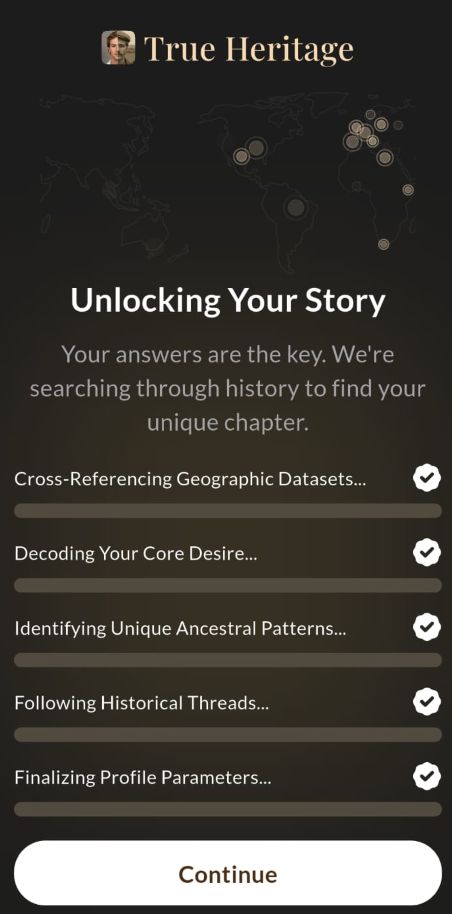
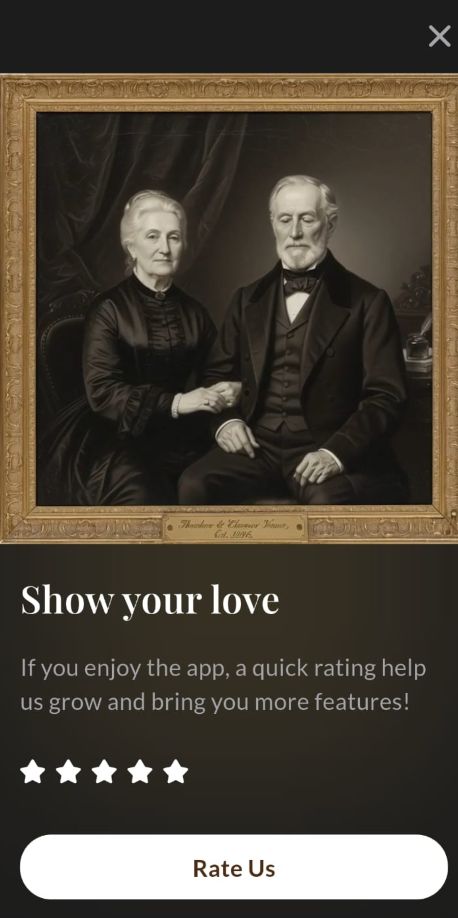
During this wait, two things happen. First, they ask for a rating. Second, they show you a partial output: some of your ancestry breakdown is visible, but not all of it.
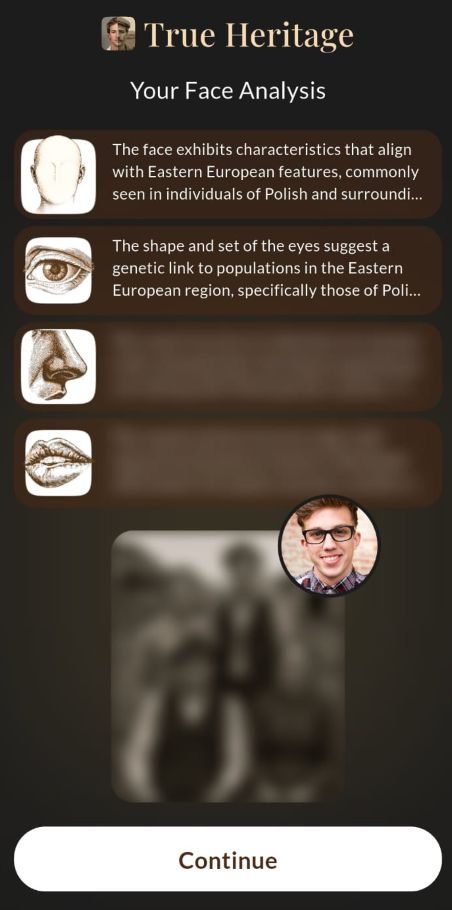
That partial output is deliberate. You can see enough to be curious. You cannot see enough to be satisfied. Psychologically, you are now committed. You have uploaded a photo, seen a teaser result, and you want to know the rest.
After analysis, a soft paywall appears. Annual plan with an “86% savings” badge versus monthly plan. The pricing anchors are set to make annual feel like the obvious rational choice.
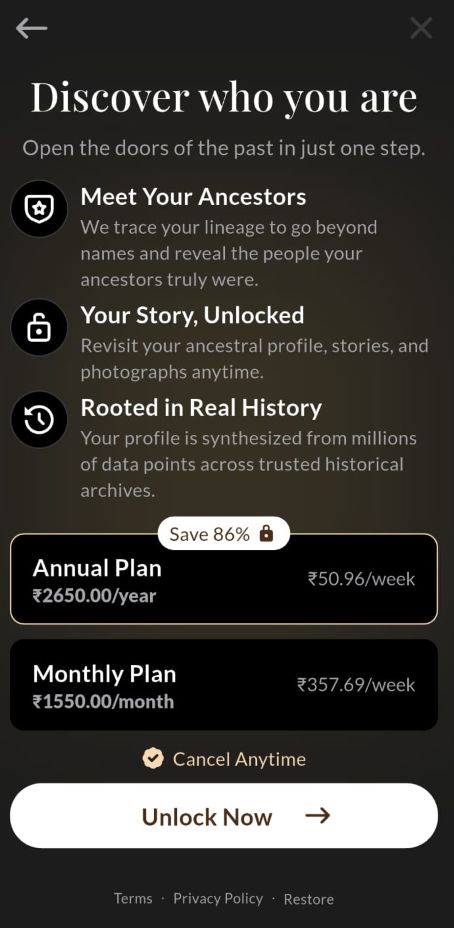
Close the paywall and you immediately hit a notification permission request. Close that and a one-time offer fires: extra 19% off.
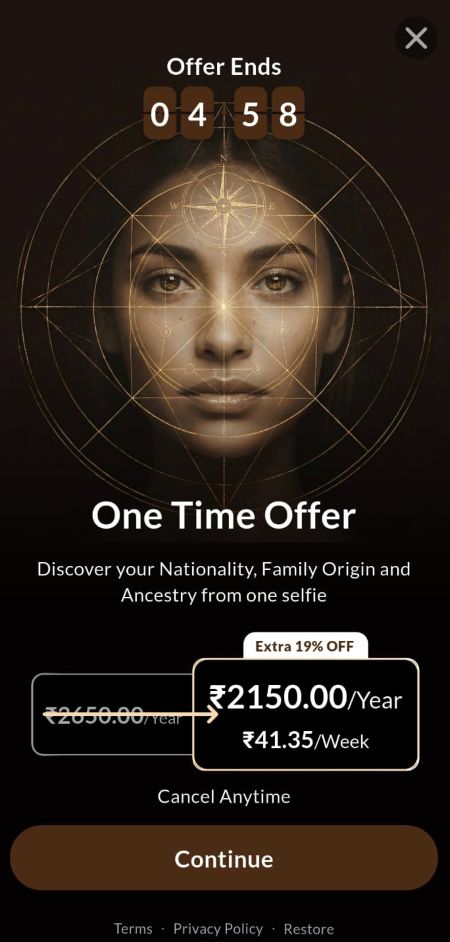
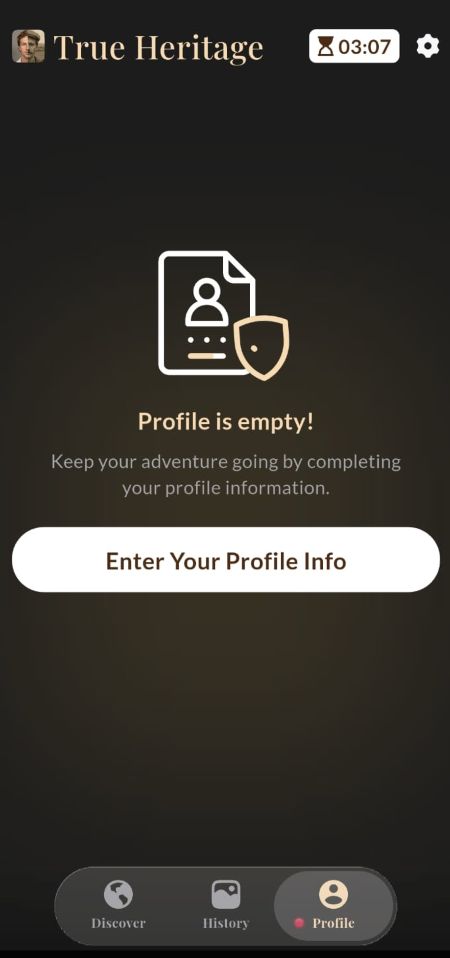
Close that and you land on the home screen, where a countdown timer sits in the top right corner. Three minutes. Seven seconds. The urgency is always visible.
That sequence is four separate conversion attempts layered inside one post-onboarding flow. Soft paywall. Notification request. One-time discount. Ambient countdown. Each layer is a different psychological trigger: value framing, habit formation, scarcity, urgency. They are not aggressive in isolation. Together they create a funnel that is hard to exit without making a decision.
The home screen itself keeps the pressure on for free users. The profile is empty. The CTA says “Enter Your Profile Info.” There is always a next step, and there is always a reason to come back.
The growth engine behind all of this is paid ads at an extraordinary scale. The parent company runs 30,000+ ads on TikTok, across multiple apps. When a company is running that volume, they are not testing anymore. The unit economics are solved. They know exactly what a download costs and exactly what it converts into.
The lesson from True Heritage is not that a single clever trick built this business. It is that every layer of the experience is designed to move the same direction. The icon converts on the App Store page. The sample photos convert skeptical users into participants. The partial result converts participants into subscribers. The four-layer paywall sequence converts interest into payment. The countdown converts procrastination into urgency.
Nothing is accidental. Nothing is decorative. Every screen earns its place by moving someone closer to converting or closer to coming back.
A three-month-old app doing $100K monthly revenue is not luck. It is a system that was designed to work before the first user ever downloaded it.