Most iOS apps die quietly.
Not from bad code or bad idea. From the same mistake – founders treat distribution as something to figure out after the product is done.
They build the app. They submit it to the App Store. They wait.
And then they watch 80% of users quit by day 3 and wonder what went wrong.
Here’s the reality. The App Store has 1.8 million apps. A calorie tracker is not special just because you built one. An AI productivity app isn’t unique just because it exists. The category doesn’t matter. The distribution does.
The founders making $10K, $50K, $100K/month figured out one thing most people never do: growth is a system, not a moment.
This guide breaks that system down — using real numbers from real apps that actually did it.
Table of Contents
- Start With the App Store Foundation (Before Anything Else)
- Build Onboarding That Creates Subscribers, Not Just Users
- Engineer Your Paywall — Don’t Just Place It
- Pick One Growth Channel and Go Deep
- Build Sharing Into the Product Itself
- Fix Retention Before You Scale Anything
- Build the Asset That Outlasts Every Algorithm
- Layer Channels Once One Is Working
- FAQ — How to Grow an iOS App
1. Start With the App Store Foundation (Before Anything Else)
Before you spend a dollar on ads. Before you post on TikTok. Before you contact an influencer.
Fix your App Store page.
This is the step most founders skip because it feels unglamorous. It’s not unglamorous. It’s the multiplier on everything else you do.
At 1,000 visits and a 3% conversion rate, you get 30 installs. At 1,000 visits and a 30% conversion rate, you get 300. Same traffic. 10x the result.
App Store Optimisation (ASO) has two distinct parts — and most founders only think about one of them.
Keyword ASO — What You Rank For
Your app title, subtitle, and keyword field determine which searches surface your app. Most founders either stuff keywords randomly or ignore them entirely. The apps ranking consistently in competitive categories treat this like paid search — constant testing, constant iteration.
Solvo, an AI homework helper doing $100K/month, targets 17,400 Apple Search Ads keywords — from “homework helper” and “algebraix” to “help with homework.” The result: Solvo ranks in the top 3 for 100 keywords, including high-intent terms like “answer ai,” “reading solver,” and “ai for science.” These aren’t obscure long-tail terms. They’re what students and parents search when they need help right now.
The same principle applies to organic keyword ASO: find the terms where you can win, not the terms the giants already dominate. Calz AI — a calorie tracker doing $200K/month in 8 months — bids on ~2,500 ASA keywords, including direct competitor names like Yuka and Cal AI. Users searching for a trusted app see Calz instead. That’s not luck. That’s deliberate keyword engineering.
What to do this week:
– Run your main keyword through AppFollow, AppTweak, or AppRadar
– Find 3–5 high-intent, lower-competition keywords you’re not targeting
– Rewrite your subtitle to include the strongest keyword — not your clever feature name
Creative ASO — What Converts
Your icon, screenshots, and preview video determine whether a visitor becomes an install.
Headway, a book summary app doing $1M/month, has run hundreds of icon and screenshot variants. Every test compounds. Their App Store page isn’t just designed — it’s continuously optimised.
The best-converting screenshots in any category share one pattern: they show a transformation, not a feature. Not “here’s what the app looks like.” But “here’s what your life looks like after using it.”
Look at the #1 app in your category. Study their screenshots. What emotional promise do they make in the first frame? That’s the bar you need to clear.
2. Build Onboarding That Creates Subscribers, Not Just Users
Downloads are vanity. Subscribers are the business.
Most iOS apps have an onboarding problem disguised as a paywall problem. Founders see low trial starts and immediately blame the paywall. But the paywall is at the end of onboarding. If users never reach it — or reach it without understanding the value — conversion rate doesn’t matter.
The Pattern in Award-Winning Apps
After studying every App Store Award winner from the last two years, a pattern emerges that most apps miss entirely.
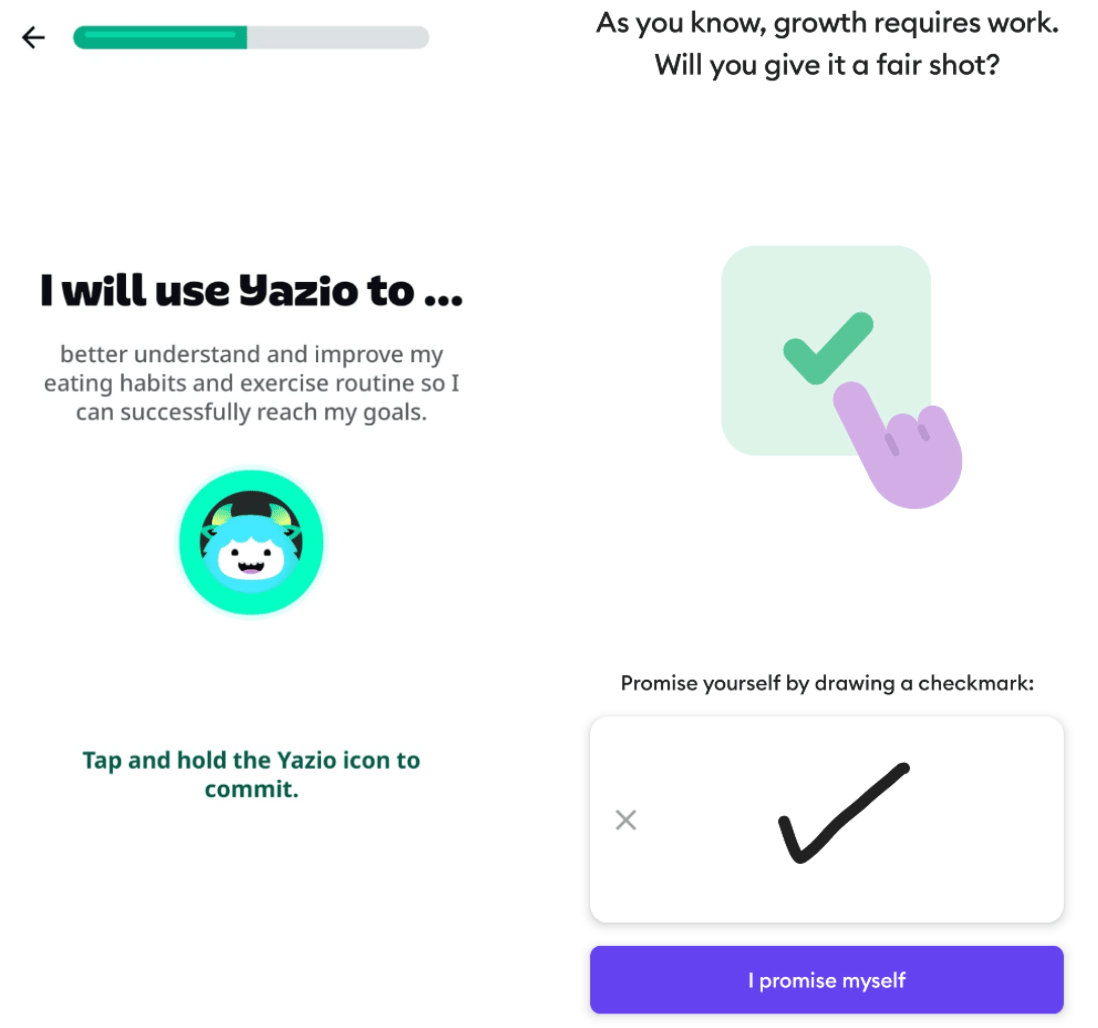
They make you do something before showing the price. Especially in meditation and wellness apps. Before the paywall appears, users hold a button, breathe with an animation, or tap to confirm a commitment. By the time the price shows up, the user has already decided. The subscription is just paperwork.
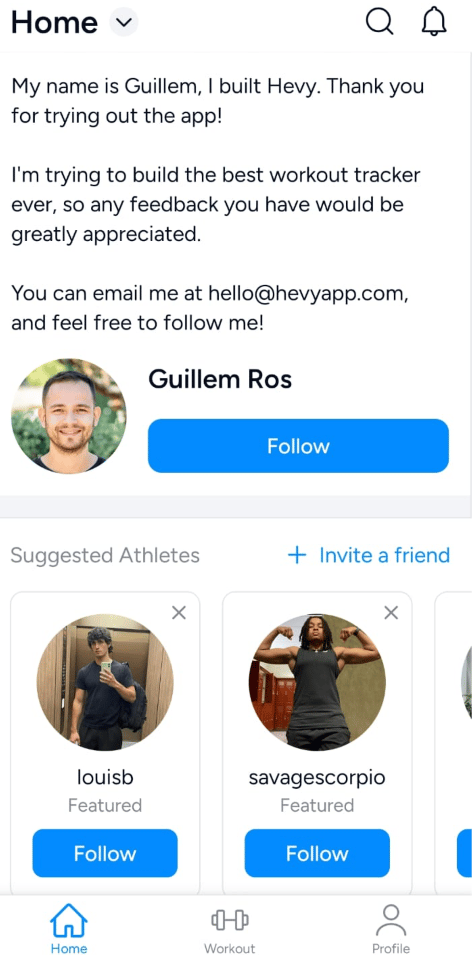
They put a real person on screen. Not a welcome screen with a logo. An actual face — photo, name, one paragraph. “I built this because I was struggling with X.” In a category full of faceless apps, a real person changes everything. Google calls it E-E-A-T. The best iOS apps have built it directly into the product.
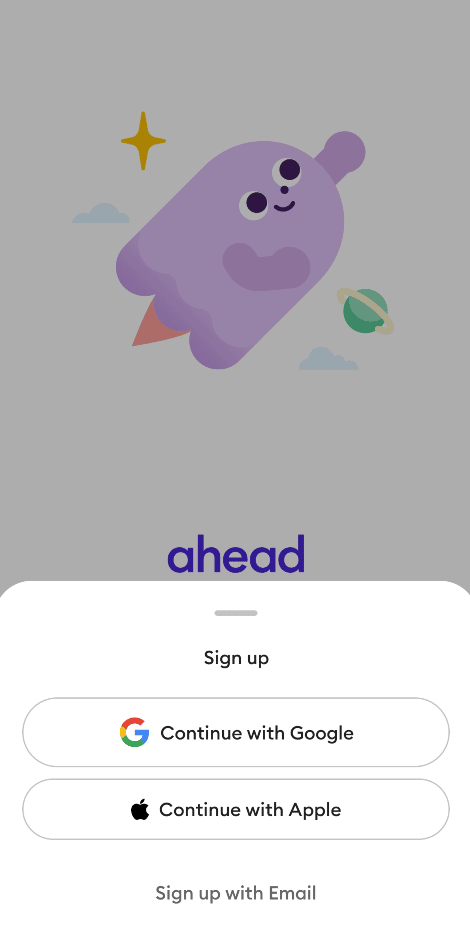
They capture email early. The old flow was: full onboarding → email at the end to save progress. The new flow: email or phone number within the first 2–3 screens. It signals the app is building a real relationship, not just chasing installs.
The Psychology Behind High-Converting Onboarding
Noom doesn’t sell a diet app. It sells a 16-week program to change your relationship with food. Every onboarding question — your weight, your goals, your past failures — isn’t just data collection. It’s identity activation. By the time the paywall appears, the user is already emotionally invested in the outcome. That’s why Noom scaled to $1M MRR.
Fabulous, a habit app doing $80K/month, opens with a single question: “Who do you want to become?” Not “what habits do you want to build.” Not “set a goal.” Who do you want to become. The frame shift is immediate — you’re not downloading an app, you’re beginning a transformation.
Finch, a self-care app at $1M/month, takes a different approach: you don’t start with a questionnaire at all. You start by creating your Finch pet — naming it and choosing its personality. Only after that emotional bond do they collect personal details. The habit of caring for the app is built before users even reach the paywall.
The principle: personalisation makes users feel the app was built specifically for them. Progress indication (“Step 3 of 7”) reduces drop-off. And the paywall should feel like a natural next step, not an interruption.
The 2026 Pattern: The Paywall Comes First
Something shifted in the last year, and it’s now visible in almost every top-grossing app.
The paywall is no longer at the end of onboarding. It comes before it.
You open the app. Three or four clean slides explain what the app does and who you’ll become. It feels like a walkthrough. It’s actually a pitch.
Then the paywall. The onboarding hasn’t even started.
You close it. A discount appears immediately — they anticipated the close.
Now the onboarding begins. Health and fitness apps run 20 or more steps. A personalised plan gets built. Then the same paywall again.
Home screen. A sticky bar at the top. Every feature locked. Everything a preview.
Three paywall moments before you’ve used a single feature.
Why did this happen? Because 75–80% of all payments in subscription apps happen on day one, in the first session. Not after a habit forms. Not on day three. Day one.
The apps making the most money right now have expanded the surface area of their paywall across the entire first session. Every touchpoint before the user exits is an opportunity to convert — and they’re using all of them.
When Zero Onboarding Wins
Not every app needs a long onboarding. Utility apps are moving in the opposite direction.
Some productivity tools have cut their onboarding to two slides straight to the paywall. If your value is immediately obvious to the user arriving at your app, a 10-screen onboarding isn’t building trust. It’s burning time.
3. Engineer Your Paywall — Don’t Just Place It
The paywall is not a door. It’s a multiplier.
You spend $5,000 on TikTok ads. You get 10,000 installs. Your trial-to-paid conversion is 12%. You get 1,200 subscribers.
Now imagine the same spend, same installs, but a paywall that converts at 30%. You get 3,000 subscribers. Same budget. 2.5x the revenue.
Fixing the paywall is the highest-ROI thing you can do before scaling any paid channel.
What the Best Paywalls Have in Common
Long, scrollable paywalls are replacing short ones. The short three-plan card paywall is fading. What’s replacing it: a full sales page inside the app. Real photos of people using the product. Feature breakdowns. Testimonials. Transformation results. FAQ. With a sticky subscribe button at the bottom – visible no matter how far you scroll.
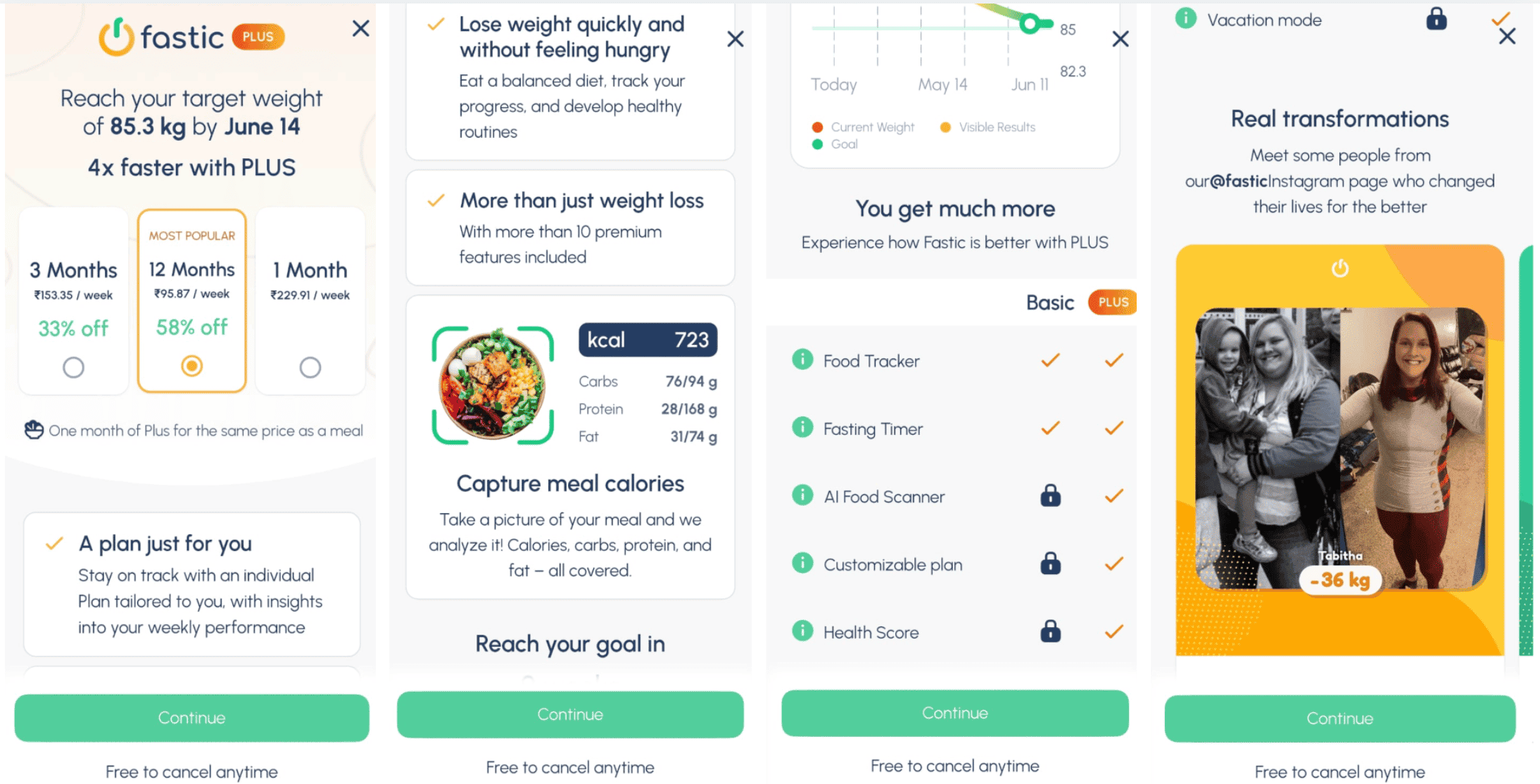
Nibble, a nutrition app doing $500K/month, built one of the most deliberately engineered paywalls in the health category. The approach uses cognitive psychology: anchoring, commitment and consistency, social proof, and strategic price presentation. Annual pricing presented first anchors the value — monthly then looks cheap by comparison. Every element is tested, not defaulted.
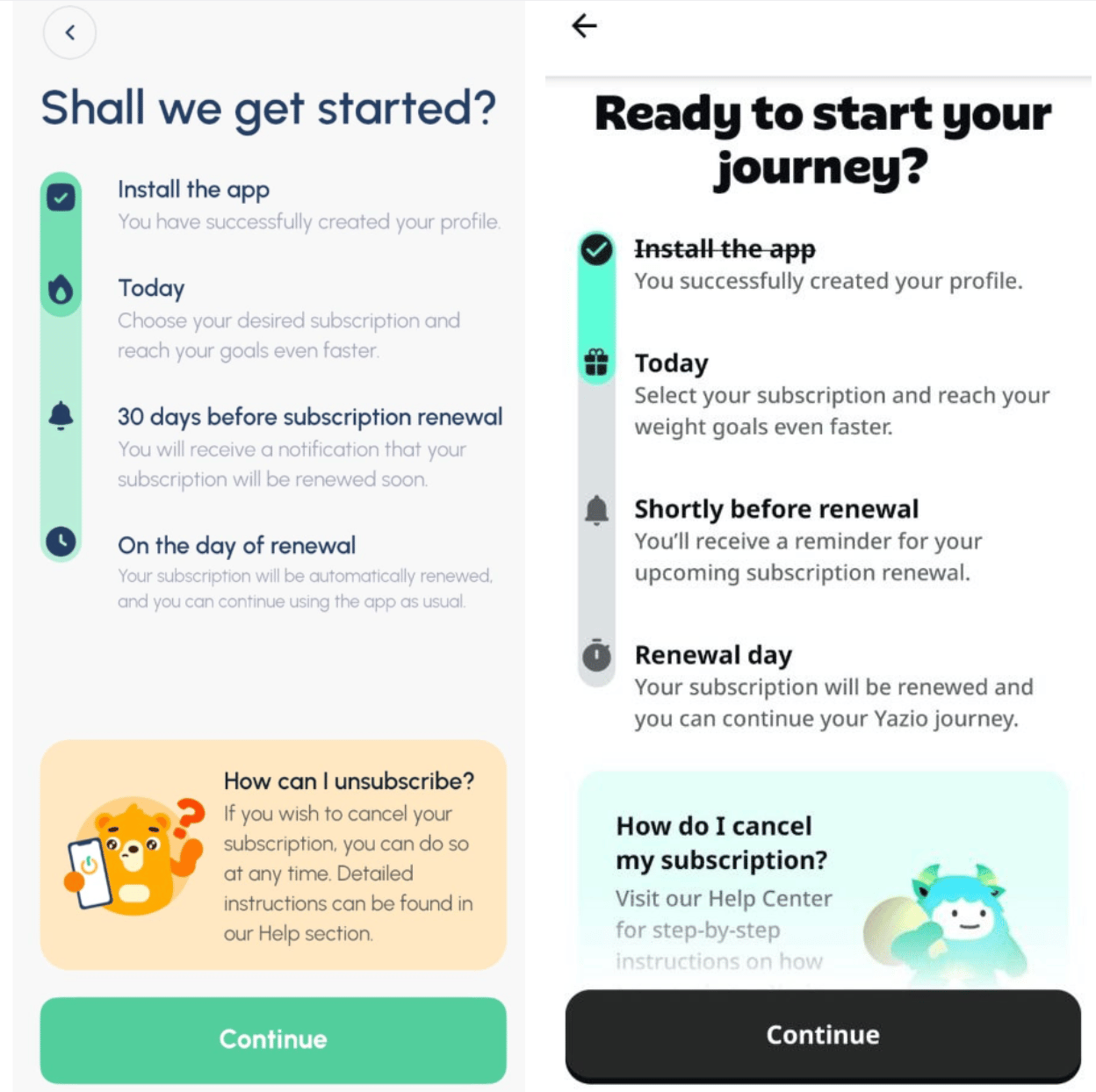
App Store Award winners also adds a visible cancellation policy (where to cancel, what to expect) in the most direct way possible.
Solvo takes the opposite approach: a hard paywall, no trial, positioned at the moment of maximum motivation — right when a student needs help with homework right now. The high-intent user arriving from ASA is already primed. The hard paywall converts because the need is urgent. Knowing when your user’s motivation peaks is as important as what your paywall looks like.
The Paywall That Follows You
Some of the highest-converting apps use a sticky bar at the bottom of every screen — a permanent offer that never disappears. When users try to close it, a discount appears instantly.
No pop-up. No forced interstitial. Just quiet, relentless presence throughout the entire app experience. Woofz and Bend use this pattern — a sticky bar that stays on screen through every interaction, with a discount that appears the moment a user tries to dismiss it.
Turning “No” Into a Habit Loop
Promova, a language learning app doing $300K/month, runs 2,000 active TikTok ads and 200 Facebook ads. Their most interesting experiment isn’t in the ad account.
When a user closes the paywall, Promova doesn’t show a discount popup. They launch a 7-day challenge: complete one lesson per day for 7 days, earn 50% off the premium subscription.
By day 7, the user has opened the app seven times. They have a streak. They’ve invested real time. And the 50% discount waiting for them? They earned it.
A given discount says: “Please pay us.” An earned discount says: “You worked for this.” Users who earn a reward through effort convert at higher rates and churn less — because they proved to themselves they’d show up.
A lighter version of the same mechanic runs as a 3-day challenge in other apps. Lower barrier, identical psychology: turn a closed paywall into a habit loop.
Note: Apple began flagging discount-on-close as manipulative behaviour in late 2025. The industry adapted — challenges, 2-for-1 offers, streak-based rewards. The principle remains. The specific mechanic evolved.
4. Pick One Growth Channel and Go Deep
This is where most founders waste months.
They post on TikTok twice, get 200 views, and declare TikTok “doesn’t work for apps.” They run Meta ads for two weeks at $10/day, see no conversions, and decide paid ads are too expensive. Then Reddit. Then influencers. Six months gone. Back at zero.
The founders who break $10K/month fast have one thing in common: they picked one channel and stayed in it long enough to learn it.
Here are five channels with the clearest evidence base right now.
Channel 1: TikTok Ads
Most founders running TikTok ads obsess over targeting. The fastest-growing apps obsess over creative. The only metric that matters: average revenue per download > cost per install. Test aggressively, cut bad creatives within 48 hours, double what works.
Headway takes this to its logical extreme: 50,000 TikTok ads in a single month. Not 50. 50,000. They’re not writing clever scripts — they’re building a creative testing machine. Volume plus iteration finds the winning creative. Winning creative means a lower cost per install.
Claim scaled to $300K/month in just 5 months using a completely different TikTok approach: UGC-native hooks. Every video runs like a mini funnel — hook, problem, payout proof, credibility close. Hooks like “I’m a broke student and just got $48 from Uber” and “Here’s how I got paid by Facebook for free.” The content feels organic, not like an ad. Crucially, the same base script is rinsed with multiple creators and angles — hitting different demographics, testing different claims — while keeping CTR high and CPIs low.
TikTok ads work when: your app has a visual result, a transformation story, or a hook that lands in the first two seconds. Health, fitness, mental health, financial, and AI apps perform best.
Channel 2: Influencer Rev-Share
The rev-share model is simple: instead of paying influencers upfront, you split a percentage of the revenue their content drives. No ad spend. No wasted budget on creators whose audience doesn’t convert. Creators only get paid when you do.
Cal AI — the fastest-growing calorie tracker in the US — built its distribution almost entirely on influencer rev-share partnerships with fitness creators. The model scales because the incentives are perfectly aligned: the better the creator’s content performs, the more both sides earn.
Rev-share deals work especially well for health, fitness, and lifestyle apps where the creator’s audience and the app’s target user overlap directly.
Start with: 5–10 micro-influencers (50K–500K followers) in your specific niche. Once you’ve proven unit economics, scale from there.
Channel 3: Facebook and Meta Ads
TikTok dominates the conversation, but Meta is still where serious subscription revenue gets built. The mechanics are different — less viral, more intent-driven — but the ceiling is higher.
Claim runs 50+ Meta ads using the same UGC playbook from TikTok, just repackaged: street interviews, zoomed reaction faces, “I got $62 from Snapchat for this lawsuit.” Every ad feels native to social — not like a legal service. Promova runs 200 active Facebook ads alongside its 2,000 TikTok ads. The lesson: the creative style that works on TikTok often works on Meta with minimal adaptation. UGC-native content travels across platforms.
The Meta advantage: better attribution, higher LTV audiences, and demographic precision that TikTok can’t match. For subscription apps targeting 25–45 year olds, Meta often outperforms TikTok on payback period even with higher CPIs.
Channel 4: Apple Search Ads
Apple Search Ads (ASA) is the most underused acquisition channel for iOS founders. Ads appear at the top of App Store search results — meaning users are already searching for your exact category when they see your app.
The intent is unmatched. A user who just searched “self care app” and sees your ad is infinitely closer to converting than a TikTok scroller who had no intention of downloading anything.
Finch bids on ~20,000 keywords in Apple Search Ads — essentially blanketing the mental health and lifestyle categories. The result: $1M/month. Solvo targets 17,400 ASA keywords and ranks top 3 for 100 of them. Paired runs 4,641 ASA keywords targeting emotional-intent searches like “cozy couples,” “relationship tracker,” and “love app” — reaching users already in a relationship mindset when they search.
The pattern across all three: coverage at scale. Don’t bid on 20 keywords and wonder why ASA isn’t working. Map your entire category. Start with the highest-intent terms, then expand to adjacent ones your competitors are ignoring.
Channel 5: Community and Organic Discovery
Before paid ads become viable — or alongside them at any stage — community is the most capital-efficient channel available.
Every category has communities where your target user already congregates: subreddits, Facebook groups, Discord servers, niche forums. The founders who crack community-led growth share a common trait: they joined as genuine participants, not as founders pitching.
The signal to look for: people using workarounds. Spreadsheets to track something. Screenshots shared manually. Group posts asking “does anyone know an app that does X?” When users are manually solving a problem your app solves, two things are true — demand is real, and the community is already pre-qualified.
Find the thread. Add value before you pitch. The installs follow.
5. Build Sharing Into the Product Itself
Most founders treat virality as something you bolt on after launch. A referral scheme, a share button, an annual Wrapped feature. All separate from the core product.
The apps with genuine organic spread built sharing into the product from the inside.
Make Your Product the Answer to a Question Users Ask Each Other
Paired is a relationship app doing $600K/month — and its most powerful growth mechanic isn’t in its ad account. It’s in the product itself.
A couples app requires two people. Every single subscriber has to invite their partner to use it with them. That’s not a referral programme — it’s acquisition built into the product model. Every paying user generates a warm, high-intent lead: someone who is told “my partner is using this app and wants us to try it together.” The conversion rate on that invite is structurally higher than any ad.
Paired ranks top 3 for 713 relationship-related ASO keywords — and maintains a 195K Instagram following for top-of-funnel discovery. But the built-in partner invite is the sharing mechanic that compounds every month without an ad budget.
The question to ask: Is there a natural reason your users would invite someone else? Who uses your app better with another person? Build that invite into the product — not as a bonus feature, but as part of the core experience.
Design Shareable Moments Around Identity, Not Information
The apps that generate genuine organic shares have figured out a counterintuitive truth: people don’t share information. They share identity.
A screenshot of stats is information. A visualisation that says something about who the user is — their streak, their progress, their year in review — is identity. The second type gets shared. The first gets ignored.
If your app accumulates data over time — workouts, habits, streaks, moods, spending, conversations — there is almost certainly a shareable annual moment sitting inside that data. Build it once. Design it to say something about the user, not just to summarise numbers. Run it every year. Zero marginal cost. Organic reach every December.
Accidental Virality Is a Signal, Not an Accident
Claim never built a formal share button into its onboarding. But users started posting screenshots of their payouts — “$48 from Uber,” “$62 from Snapchat” — across TikTok, Reddit, and money-saving groups entirely unprompted.
The app’s core output (proof of a real payout) is inherently shareable. Not because Claim engineered a share flow. Because the result itself — “I got money I didn’t know I was owed” — is something people want to tell others about.
Your app probably has a moment like this already. A chart, a score, a streak, a result that users would show someone else if it were slightly easier to share. Find it. Make it easier. The screenshot is already the marketing asset.
Borrow a Mechanic That Already Has Emotional Weight
Finch didn’t invent the self-care app. But it borrowed a mechanic that already meant something to its target audience: the virtual pet.
The Tamagotchi model — raise a digital companion, keep it healthy through daily actions — was already emotionally loaded for Finch’s demographic. Transplanted into mental wellness, it created instant recognition. Users named their Finch. Decorated it. Cared about it. And shared screenshots of it with friends — not because of a share button, but because showing your Finch became a way of showing your mental health journey.
You don’t have to invent a visual language or a mechanic. Find one that already means something to your target user — from a game, a social platform, a subculture — and apply it in a context where it’s never been used before. The familiarity creates immediate comprehension. The novelty creates shareability.
6. Fix Retention Before You Scale Anything
Retention is the thing nobody wants to talk about because it’s slow and unglamorous.
Here’s the math that changes your mind fast.
An app with 20% Day-30 retention and 1,000 new installs per month will have roughly 200 active users after a year of steady acquisition.
An app with 40% Day-30 retention and the same 1,000 installs per month will have roughly 400 active users — 2x more — at exactly the same acquisition cost.
Finch engineered retention from the first screen. The moment onboarding ends, you’re already on a streak. Log a self-care task → your pet gains energy → your pet explores the world. The loop creates a daily reason to return that isn’t about notifications. By the time users have maintained a week-long streak, abandonment rates drop sharply. Finch scaled to $1M/month with this mechanic at the centre of everything — paid acquisition drives installs, but the habit loop keeps subscribers.
Fabulous builds retention differently — daily rituals, progress ceremonies, and commitment mechanics baked into every session. The result: users who open the app out of habit, not because of a notification.
The 2026 Retention Layer: Widgets and Mascots
Two trends that were rare in 2025 are everywhere in 2026.
Widgets are now a retention tool, not just a streak feature. Almost every top app has one — whether or not streaks are part of the product. The goal isn’t showing progress. It’s living on the home screen. The most valuable real estate on a phone isn’t the App Store. It’s the wallpaper. A widget is a permanent placement that requires no push notification.
Mascots have become a monetisation layer. Apps let users dress the mascot, give it furniture, design its room — creating one-time purchases on top of or instead of a subscription. The mechanic creates emotional investment that’s structurally difficult to abandon. You don’t delete an app you’ve been decorating. Finch’s merch section — selling physical versions of the digital pet — draws 1M monthly website visitors, with the merch page as a top destination. The mascot became a brand that extends beyond the app.
The rule: Before scaling any paid channel, know your Day-1, Day-7, and Day-30 retention. If Day-1 is below 40%, fix onboarding. If Day-7 is below 20%, fix habit formation. If Day-30 is below 15%, fix your core loop. Scaling traffic into a leaky bucket just empties your budget faster.
7. Build the Asset That Outlasts Every Algorithm
Every growth channel you use exists at the pleasure of someone else’s platform.
The App Store algorithm will change. TikTok ad costs will rise. Meta’s attribution changes will shift the economics of paid. Platforms come and go.
One thing doesn’t depend on any of them: your email list.
The founders who weather every platform shift have one thing in common — they started building a direct relationship with their users long before they needed it. An email list means your next launch, your next feature, your next pricing change isn’t starting from zero. It’s going out to people who already know and trust your product.
The mistake most founders make: waiting until their app is “big enough” to start building a list. The right time is day one.
Give users a real reason to hand you their email — early access, a personalised result from inside the app, a resource that solves the problem they came to solve. The mechanism matters less than starting early. Every month you delay is a month of compounding you don’t get back.
“If something goes wrong with the App Store algorithm, we’re not starting from square one.” — a principle every founder who’s survived a major platform change wishes they’d acted on earlier.
8. Layer Channels Once One Is Working
$10K/month is achievable on a single channel, executed well.
$50K/month usually requires two.
The mistake most founders make is trying to run all channels simultaneously from the start. They spread too thin to learn any of them properly.
The sequence that works:
First, fix ASO — it’s always on, compounds over time, and produces the lowest long-term CPI of any channel. Then pick the one paid or organic acquisition channel best-matched to your app and go deep until you have consistent, profitable installs. Then fix retention and improve LTV before adding another acquisition layer. Only then — when you have the revenue to fund it and the data to prove unit economics — do you add a second channel.
Founders who try to run TikTok ads, Apple Search Ads, Meta, and influencer marketing simultaneously in month one end up with four channels that sort of work and zero budget left to actually learn any of them.
One channel mastered compounds. Four channels half-done stalls.
The Actual Lesson
The App Store doesn’t reward the best app.
It rewards the best-distributed app.
The founders making $10K, $50K, $100K/month aren’t doing anything magical. They tested one channel deeply before layering others. They fixed their paywall before scaling acquisition. They built retention into the product instead of patching it with push notifications.
None of them waited for discovery. All of them built systems.
Growth is a system, not a moment.
The ones who understand that — who treat distribution as a craft, not an afterthought — are the ones whose revenue compounds month after month.
The ones still waiting for a viral moment are making the same $200/month they made six months ago.
Ready to Go Faster?
Every strategy in this article — the ASO playbook, the paywall structure, the TikTok ad framework, the influencer rev-share model — is broken down step by step inside Growth Hacking Lab.
It’s where 150+ iOS founders share what’s working right now. Not theory. Not outdated courses. What’s working this quarter, from founders who are doing it.
Members get 17+ plug-and-play growth playbooks (ASO, Meta Ads, TikTok, Apple Search Ads, Reddit, Retention, Paywalls, Onboarding, and more), a 21-day App Marketing Campaign, and weekly live calls with founders sharing real numbers.
$299/year. 7-day money-back guarantee.
9. FAQ — How to Grow an iOS App
How long does it take to grow an iOS app to $10K/month?
It depends on the channel. Founders using TikTok ads have hit $10K MRR in under 90 days. Organic channels — ASO, community — typically take 4–6 months to compound meaningfully. The fastest paths combine a working paid channel with a solid App Store foundation from day one.
How much does it cost to market an iOS app?
You can start for free. ASO costs nothing but time. Community-driven growth costs nothing. Influencer rev-share deals cost nothing upfront — creators earn a percentage of revenue they generate. Paid ads (TikTok, Meta, Apple Search Ads) can start profitably at $20–50/day once you have a validated creative and a paywall that converts. The mistake is spending on ads before fixing onboarding and the paywall — that’s where budgets disappear fastest.
What is the most effective channel for iOS app growth right now?
In 2026, TikTok ads and influencer rev-share are the two fastest channels for subscriber apps. Apple Search Ads delivers the highest-intent users (they’re already searching for your category). ASO is the best long-term compounding channel because it works 24/7 without ongoing spend. Facebook/Meta ads produce higher LTV audiences and often outperform TikTok on payback period for subscription apps targeting 25–45 year olds.
How do I get my first 1,000 downloads without paying for ads?
Three approaches that work without an ad budget: (1) Keyword ASO — target 3–5 lower-competition, high-intent keywords and rank organically. (2) Community — find the groups where your target user already talks about the problem your app solves. Add genuine value before mentioning your app. (3) Influencer micro-deals — offer a rev-share to 5–10 small creators in your niche. They post, you only pay when it converts.
What is a good paywall conversion rate for an iOS app?
Industry average trial-to-paid conversion is 15–25% for well-structured subscription apps. The best-performing paywalls — long, scrollable, with real social proof and a sticky subscribe button — convert at 30–45%. Most apps don’t know their paywall conversion rate. You can see it in App Store Connect under Subscription Reports.
How do I improve Day-30 retention for my iOS app?
The biggest Day-30 retention drivers: a strong habit loop in the core product (users who build a daily ritual churn at a fraction of the rate of those who don’t), well-timed push notifications (triggered by user behaviour, not sent at 9am like every other app), and a home screen widget that keeps the app visible without requiring an open. Fix Day-1 retention first. If users aren’t coming back on day 1, they won’t be there on day 30.
When should I start running paid ads for my iOS app?
After validating three things: (1) your App Store page converts at 25%+ from visitors to installs, (2) your paywall converts at 15%+ from trials to paid, and (3) your Day-7 retention is above 20%. If any of these three are broken, paid ads will accelerate your losses, not your growth. Fix the fundamentals first. Paid ads are a multiplier — they multiply whatever you already have, good or bad.
What’s the difference between ASO and paid app marketing?
ASO (App Store Optimisation) is organic — you improve your app’s visibility and conversion rate within the App Store itself, without paying per click or per install. It compounds over time and produces the lowest long-term CPI of any channel. Paid marketing (TikTok, Meta, Apple Search Ads) generates installs immediately but requires ongoing spend to maintain. The best approach: build ASO as the permanent foundation, then layer paid channels on top once you’ve identified one that generates profitable installs.
Explore the case studies behind this guide:
– How Headway Built a $1M/Month Growth Machine with 50,000 TikTok Ads
– How Solvo Makes $100K/Month With a Hard Paywall and 17,400 ASA Keywords
– How Claim Scaled to $300K/Month in 5 Months With TikTok UGC
– How Finch Grew to $1M/Month With Paywalls, Habit Loops, and ASA Domination
– How Paired Built a $600K/Month Funnel by Turning Relationships Into Retention
– How Nibble Scaled to $500K/Month by Weaponizing Psychology
– How Noom Scaled to $1M MRR With the Most Engineered Onboarding in Health Apps
– How Calz AI Hit $200K/Month in 8 Months
– How Fabulous Makes $80K/Month With the Most Engineered Onboarding in the App Store
– How Promova Runs 2,000 TikTok Ads and Converts Paywall Rejectors
– Browse All 100+ App Case Studies →