$1 million in monthly revenue. 300,000 downloads every month. BetterMe looks like a simple fitness app. Under the hood, it’s running one of the most aggressive advertising machines across every channel imaginable.
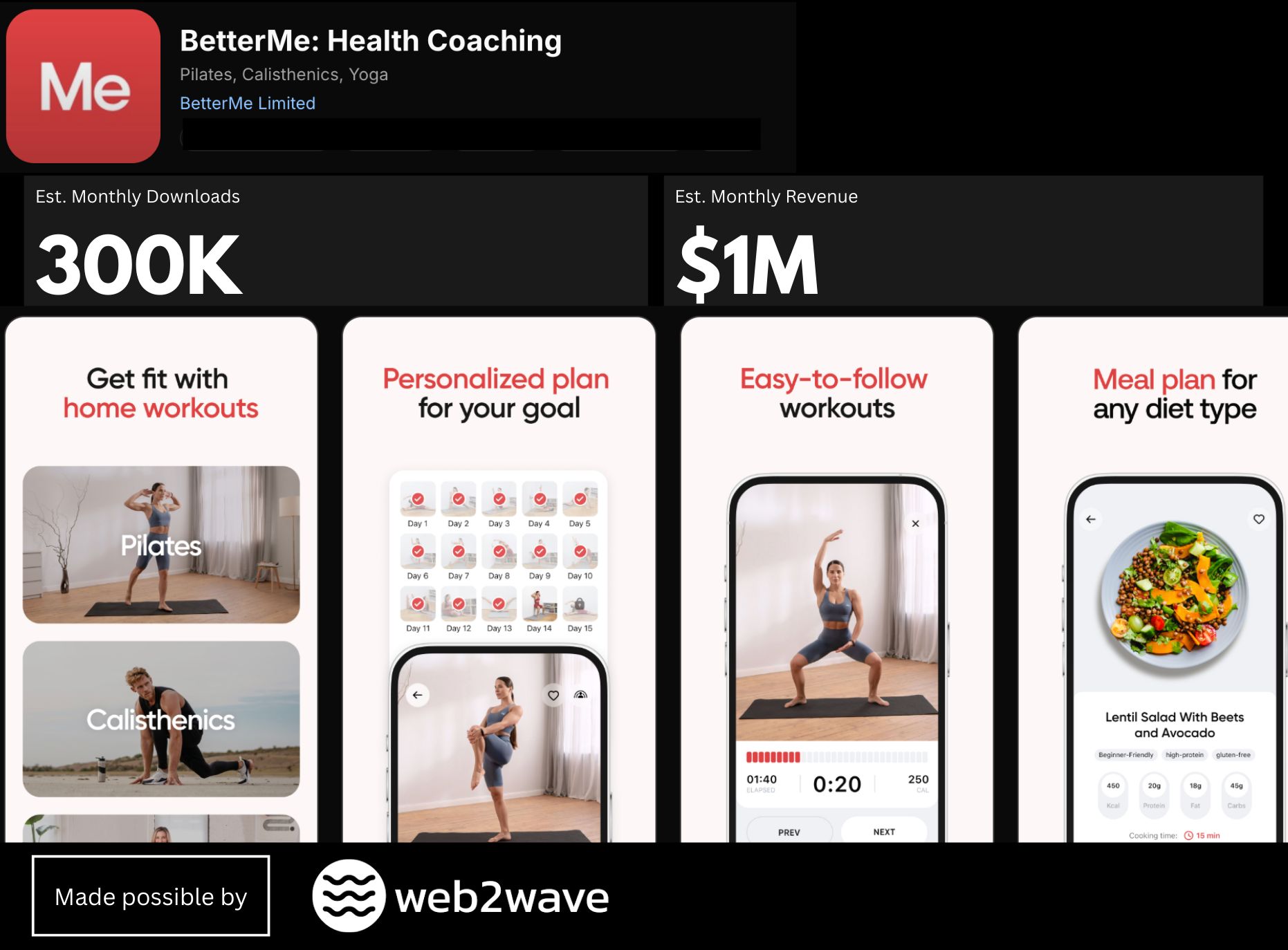
Here’s exactly how it works.
The onboarding is insanely long. Most apps ask two or three questions before getting out of the way. BetterMe asks about your fitness goals, your body composition, your daily routine, your time commitment, and everything in between.
By the time you reach the home screen, you’ve invested ten minutes of your life answering questions about yourself.
That investment is deliberate. The more time a user spends in your onboarding, the more psychologically committed they become to the outcome you’re promising. It stops feeling like an app. It starts feeling like a personal fitness commitment.
The flow walks you through your main goal (lose weight, build muscle, keep fit), your preferred activities (fitness at home, walking, running, yoga), a visual body type selector, and finally a full fitness summary that calculates your BMI, lifestyle, activity level, and body type all at once.
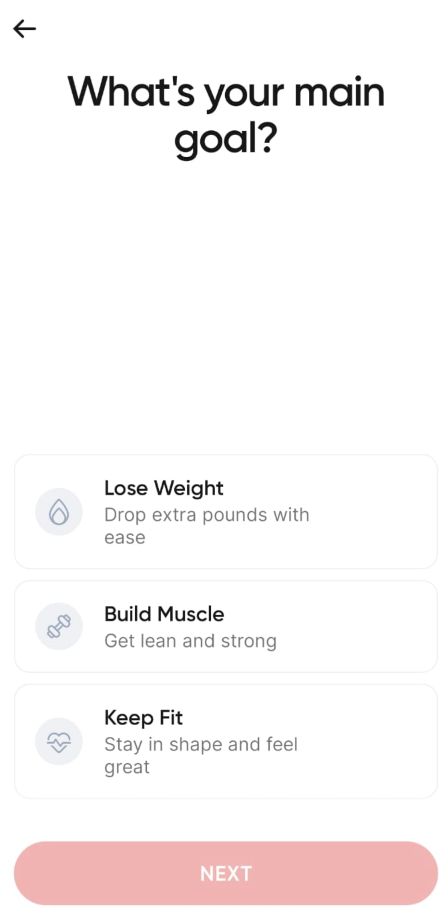
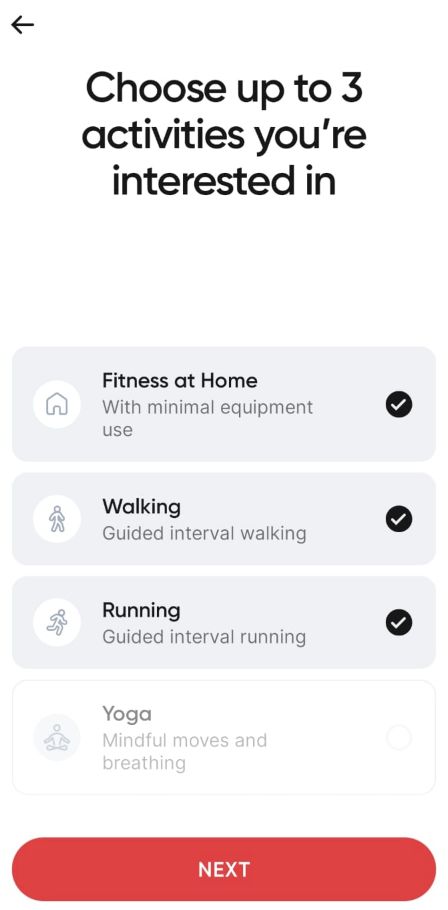
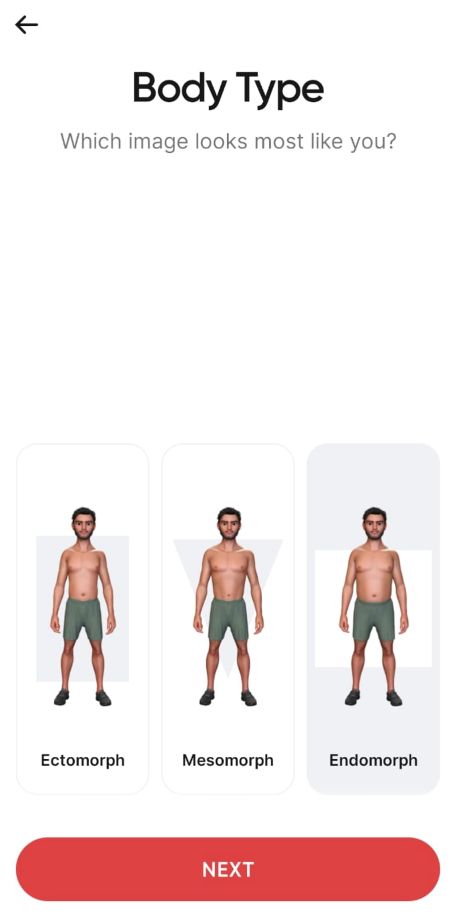
You see your data laid out in front of you. You see where you are versus where you want to be. The app has already done its job before the paywall even appears.
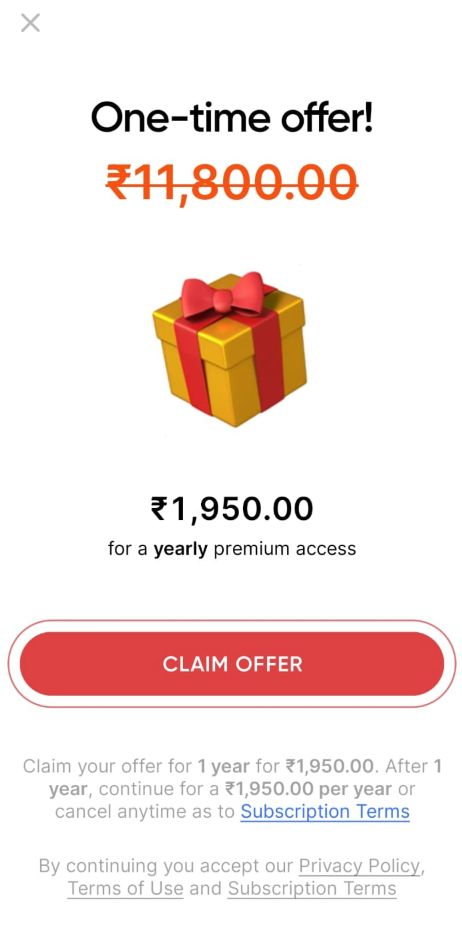
Then comes the soft paywall. One payment plan. An option to enable reminders. Close it and you get hit with a massive discount. The paywall isn’t trying to overwhelm you with choices. It’s keeping the decision simple: subscribe or lose the offer.
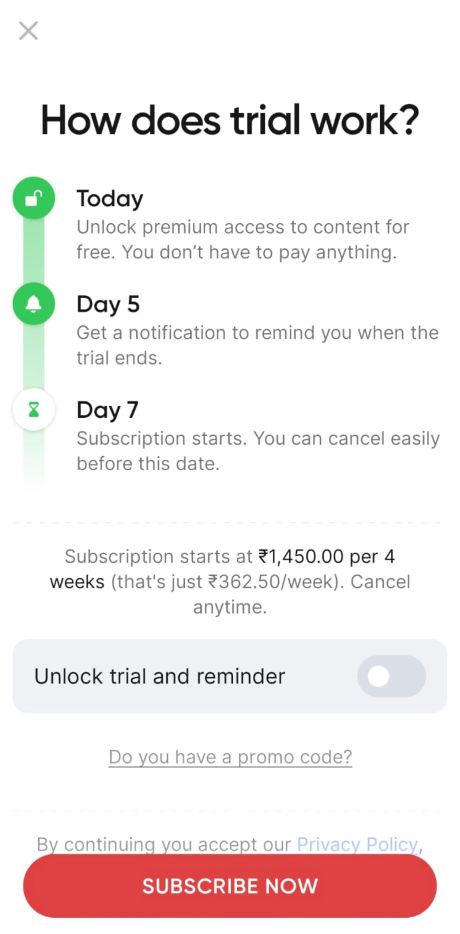
The trial structure is clean: unlock premium today for free, get a notification on day five, subscription starts on day seven. Cancel anytime. Close the paywall and you’re presented with a one-time offer or a yearly option.
Inside the app, the monetization doesn’t stop at the subscription. BetterMe runs a full upsell ecosystem. Paid workout challenges are scattered throughout the product.
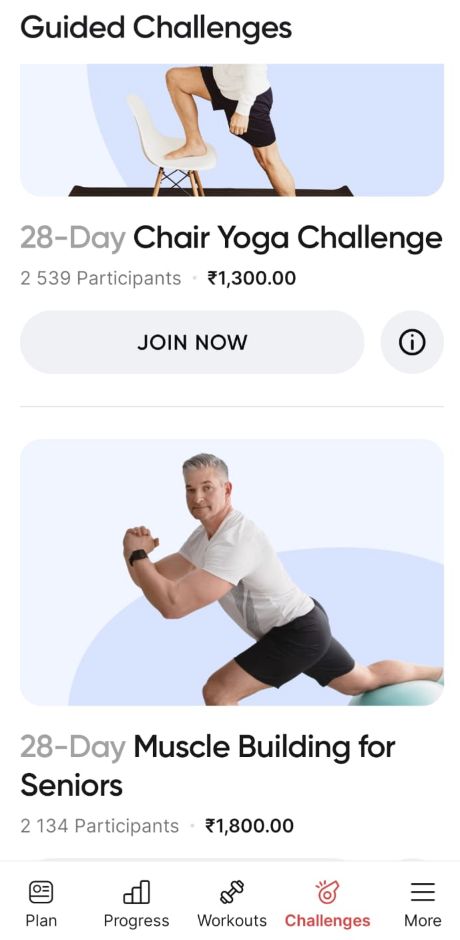
The 28-Day Chair Yoga Challenge has 2,539 participants . The 28-Day Muscle Building for Seniors has 2,134 participants. The subscription gets you in the door. The challenges and upsells build the revenue on top.
The subscription is just the start. Upsells do the rest.
Now for the distribution. BetterMe’s major growth driver is paid advertising, and the numbers are staggering. They’re running approximately 1,600 active ads on Meta, around 6,000 ads on Google, and close to 180,000 ads on TikTok. That last number deserves a second read. 180,000 TikTok ads.
Their major growth driver is paid ads.
📘 Meta → ~1,600 ads
📺 Google → ~6,000 ads
🎵 TikTok → ~180,000 adsBut, here’s the clever part 👇
They don’t push people directly to the App Store.
(4/7) pic.twitter.com/iJ1OWtQtHV
— AI, Ads & Apps (@AIAdsApps) March 27, 2026
But here’s the part most people miss. They don’t push people directly to the App Store.
Instead, BetterMe runs a web-to-app funnel. Ads send users to a web page. Users onboard on the web. Payment happens on the web. Then they get sent to the app. This setup skips Apple’s 30% tax entirely and delivers cash in 2 to 3 days instead of Apple’s standard 30-plus day payout cycle.
Tools like Web2Wave make this kind of funnel straightforward to implement.
The economics of this are significant. At $1M monthly revenue, avoiding Apple’s 30% cut means BetterMe keeps an additional $300,000 every single month that would otherwise go to the App Store. That’s $3.6 million per year staying inside the business.
The full picture is a machine with carefully connected parts. An aggressive paid ad operation drives traffic, mostly to TikTok. A web-to-app funnel captures payment before the app is ever opened. A deeply psychological onboarding builds commitment before the paywall appears. A soft paywall with a discount fallback maximizes conversions. And an in-app upsell engine keeps monetizing the same user base long after the initial subscription.
This is not a fitness app that got lucky. It’s a revenue system that happens to deliver fitness content. Every decision, from the length of the onboarding to the placement of paid challenges, is made in service of one number: monthly revenue.
At $1M a month, that number is working.