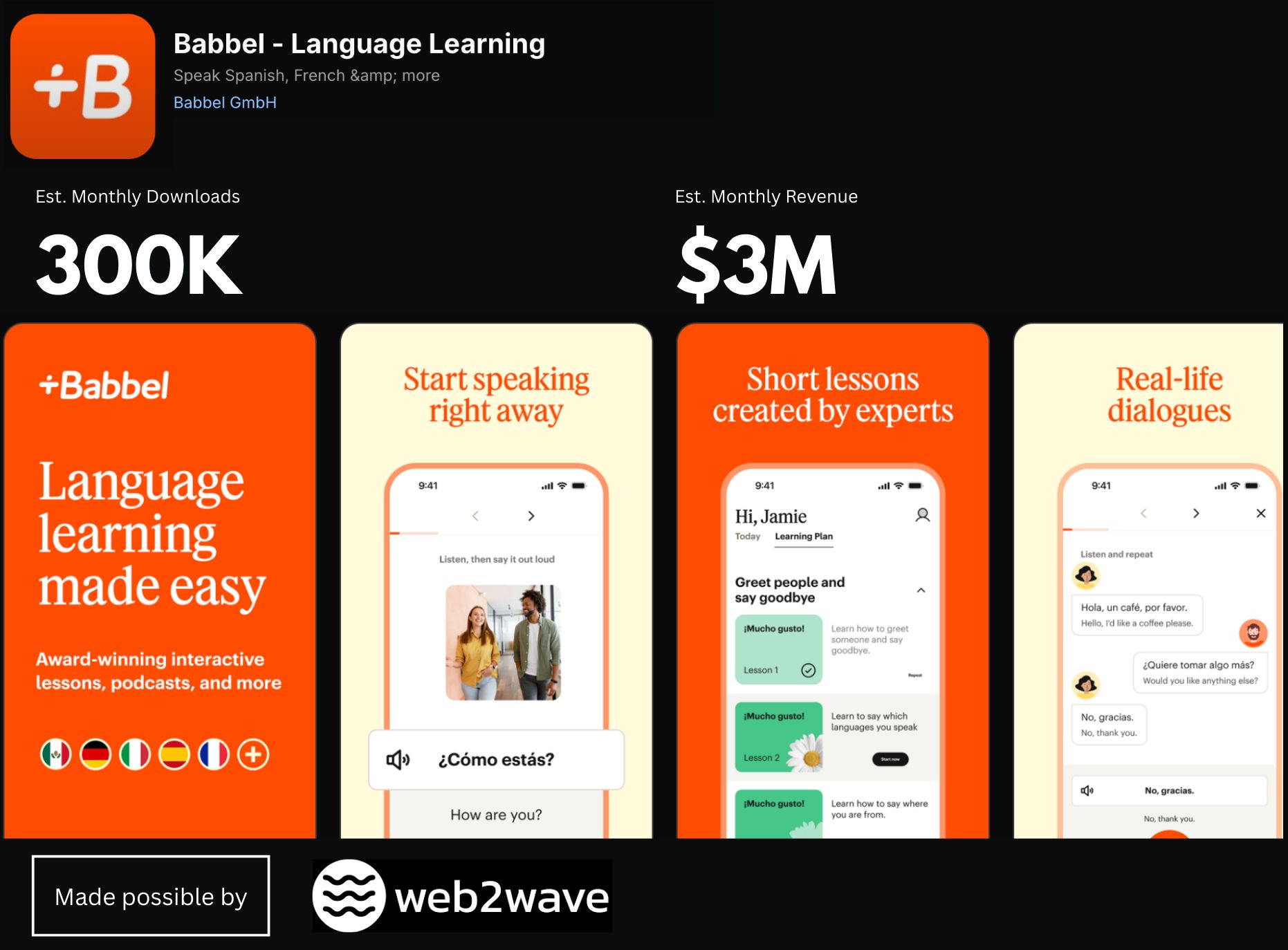
$3 million in monthly revenue. 300,000 downloads per month. Babbel looks like a simple language-learning app. Under the hood, it’s a well-oiled paid ads machine with a conversion funnel that catches you at every exit point.
Here’s exactly how it works.
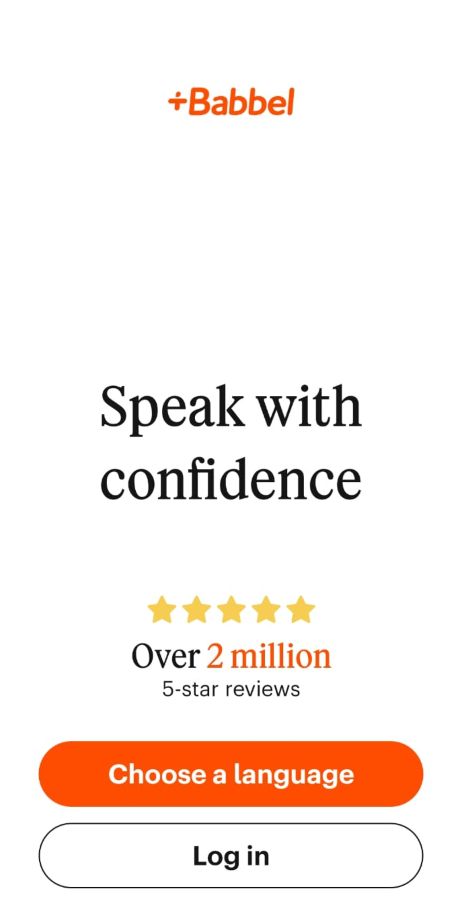
The onboarding opens with social proof before it asks for anything. Over 2 million 5-star reviews and the phrase “Speak with confidence” are the first things you see. The message is immediate: this works, and other people have already proven it. The CTA is equally clear: “Choose a language.” Not “Sign up.” Not “Get started.” Choose a language. It frames the decision as a learning decision, not a purchase decision.
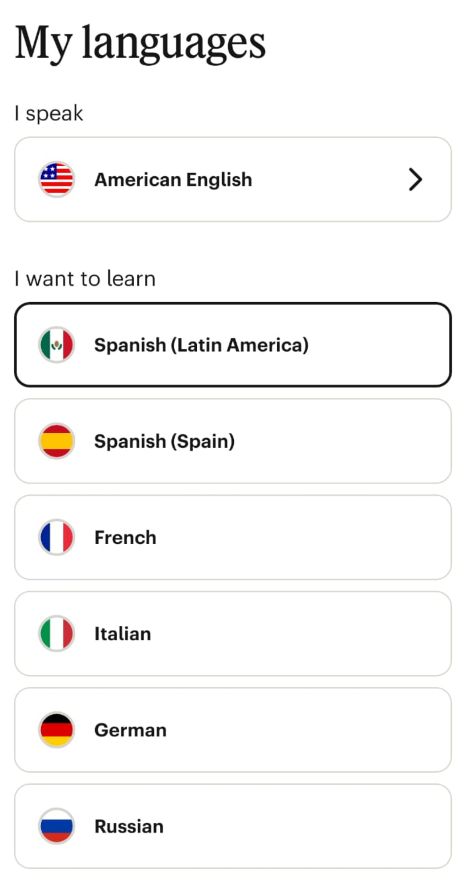
Then the questions begin. Which language you want to learn. Why you want to learn it. How much time you’ll spend daily. Options range from 5 minutes a day up to 60 minutes.
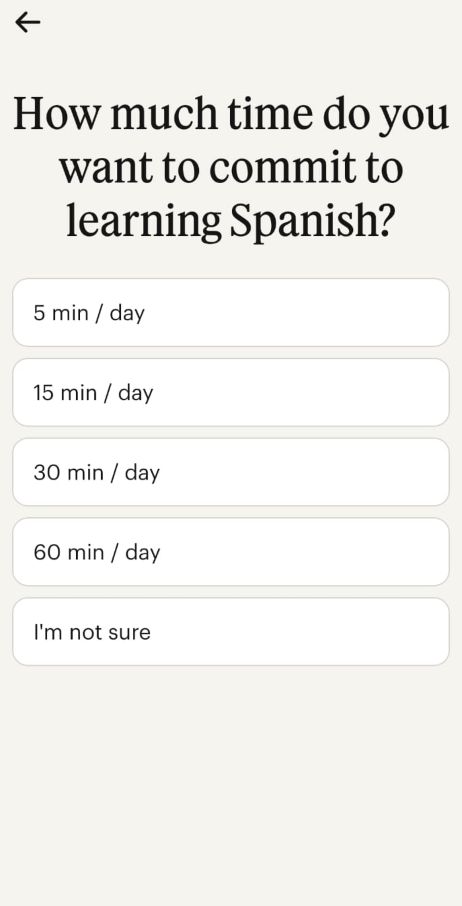
These questions look like personalization. They are, but they’re also segmentation. Babbel is sorting users by intent and commitment level before showing the paywall.
A high-intent user who selects 30 or 60 minutes per day sees a different offer than someone who picked 5 minutes. The onboarding isn’t collecting data for the learning experience alone. It’s collecting data for conversion optimization.
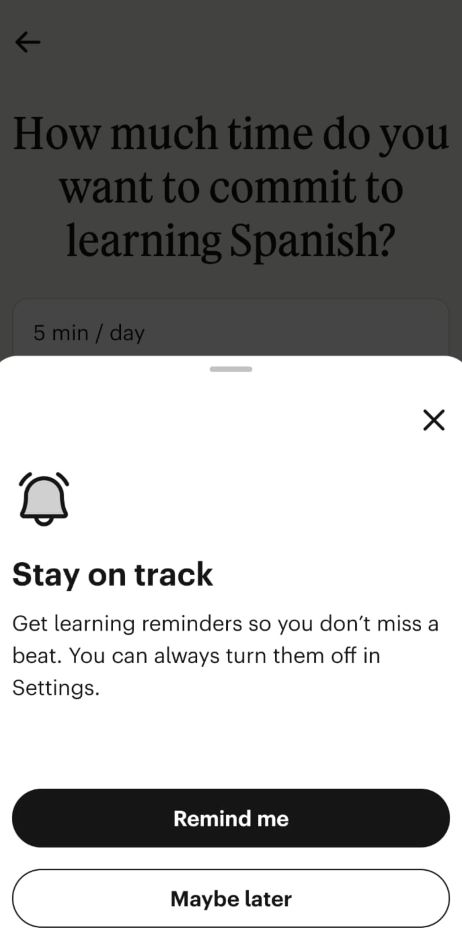
Then comes the notification ask. “Stay on track. Get learning reminders so you don’t miss a beat.” Soft language. Easy to accept. The notification permission comes immediately after the commitment question, when the user has already decided they’re serious about learning. The timing is not random.
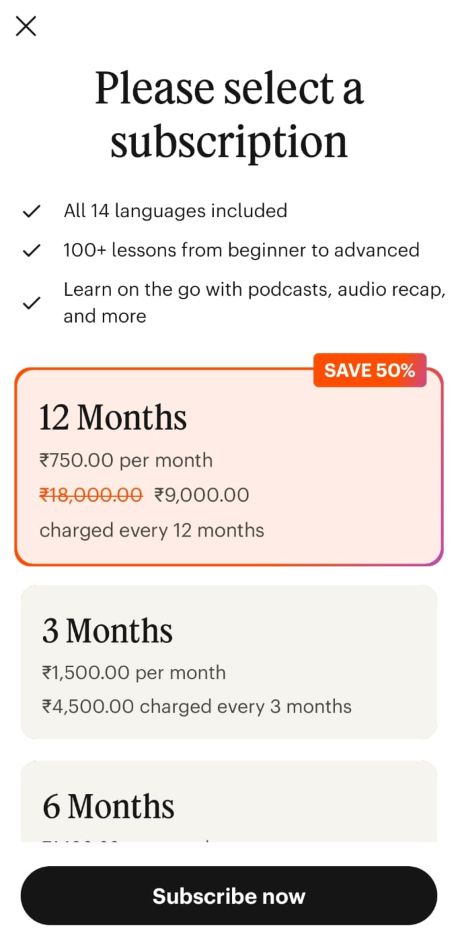
Then comes the paywall. Three subscription options: 12 months ( marked as 50% off), 3 months, and 6 months. The 12-month plan is highlighted with a “Save 50%” badge. The default selection steers you toward the annual commitment.
Close the paywall and you don’t hit a wall. You get an offer for a 7-day free trial.
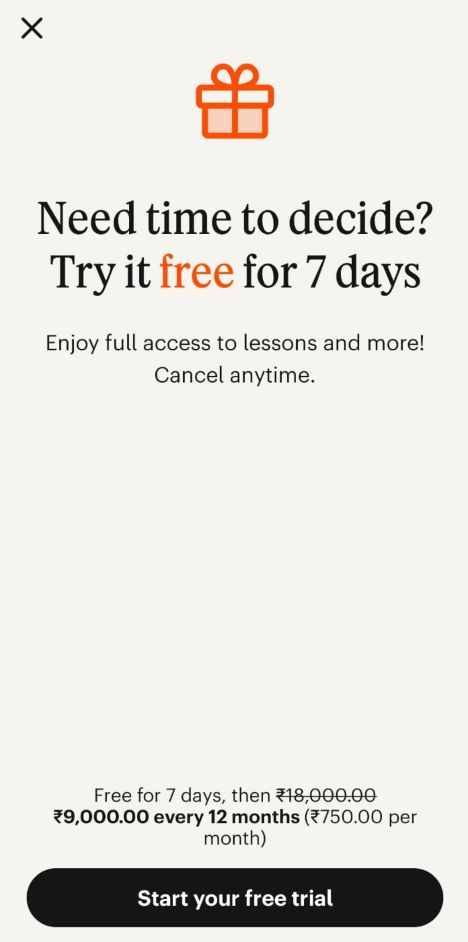
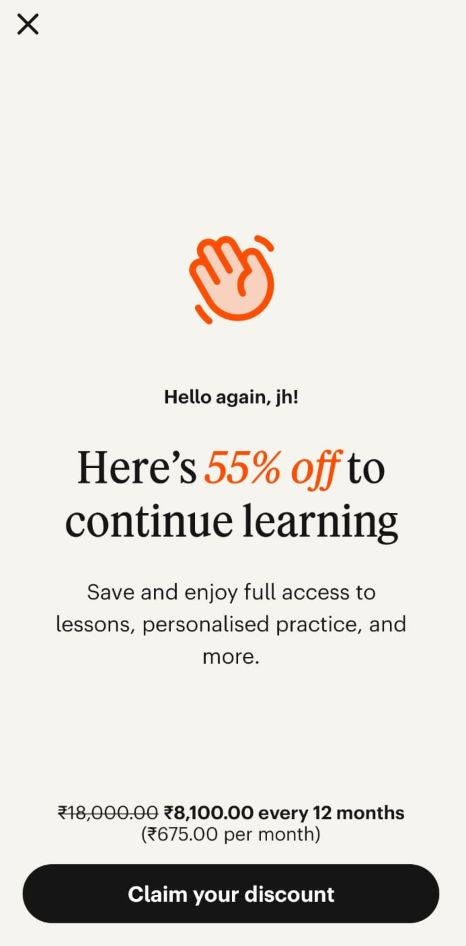
Close that too and you get hit with 55% off. Each close triggers a softer offer. No hard stop. No friction bomb. Just a quieter ask every time.
On the home screen, Babbel keeps reminding you. A limited offer banner shows the 7-day free trial with a deadline countdown. Daily streaks appear in the top corner. You’re always one tap away from paying. The urgency never disappears, it just waits quietly until you’re ready.
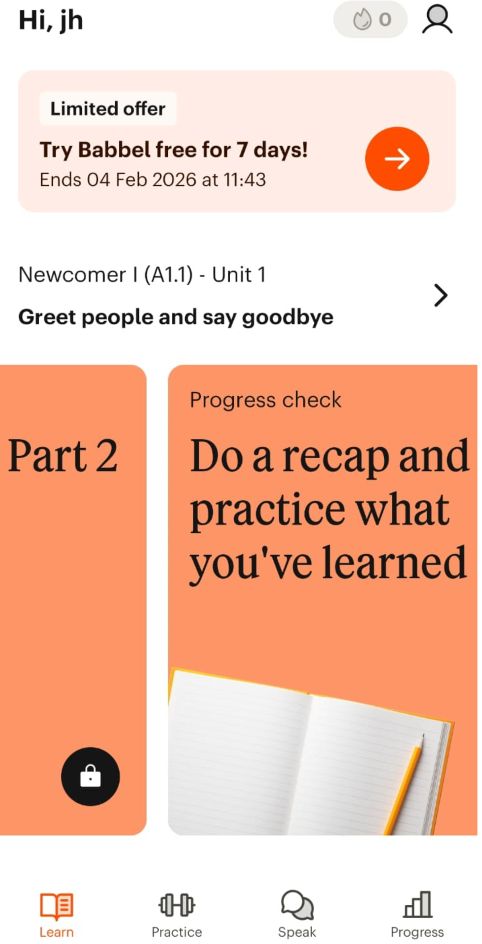
Inside the app, the lesson structure is clean and well-paced. Newcomer level units start with practical phrases, progress checks, and recaps. The product itself is polished. Babbel doesn’t need to manufacture urgency because the content earns repeat usage. The streaks and reminders just accelerate what the product already creates naturally.
The growth engine behind all of this is paid advertising. Babbel runs approximately 4,000 active ads on Google and around 200 ads on Facebook. Compared to BetterMe’s 180,000 TikTok ads, these numbers look modest. But Babbel is targeting a different kind of user: someone actively searching for language learning, not someone scrolling passively.
Their major growth driver is Paid ads.
📺 Google ~4,000 ads
📘 Facebook ~200 adsBut, here’s the clever part 👇
They don’t push people directly to the App Store. pic.twitter.com/hCr1bPEg2C
— AI, Ads & Apps (@AIAdsApps) February 3, 2026
Google ads at scale means capturing high-intent search traffic. Someone who searches “learn Spanish app” is much further down the purchase funnel than someone who sees a TikTok video. Babbel’s ad mix reflects that. They spend where intent is already present.
But here’s the clever part. Babbel doesn’t push people directly to the App Store. Instead, they send users to their website, onboard them there, convert to paid on the web, and then direct the user to the app install. The same web-to-app funnel that BetterMe runs. It skips Apple’s 30% commission entirely and improves margins from the first transaction.
Tools like Web2Wave make it easy to implement the funnel.
At $3M monthly revenue, that 30% saved is $900,000 per month staying in the business. Over a year, that’s $10.8 million that never goes to Apple.
The full picture is a mature conversion system. Social proof leads the onboarding. Segmentation questions build commitment before the paywall. A multi-layer paywall catches every exit type. Home screen reminders keep non-converters warm. Paid ads on Google capture high-intent users. And a web-to-app funnel extracts maximum margin from every subscription.
Babbel isn’t winning because language learning is an easy market. It’s winning because they’ve engineered every step of the journey from the first impression to the first payment renewal.